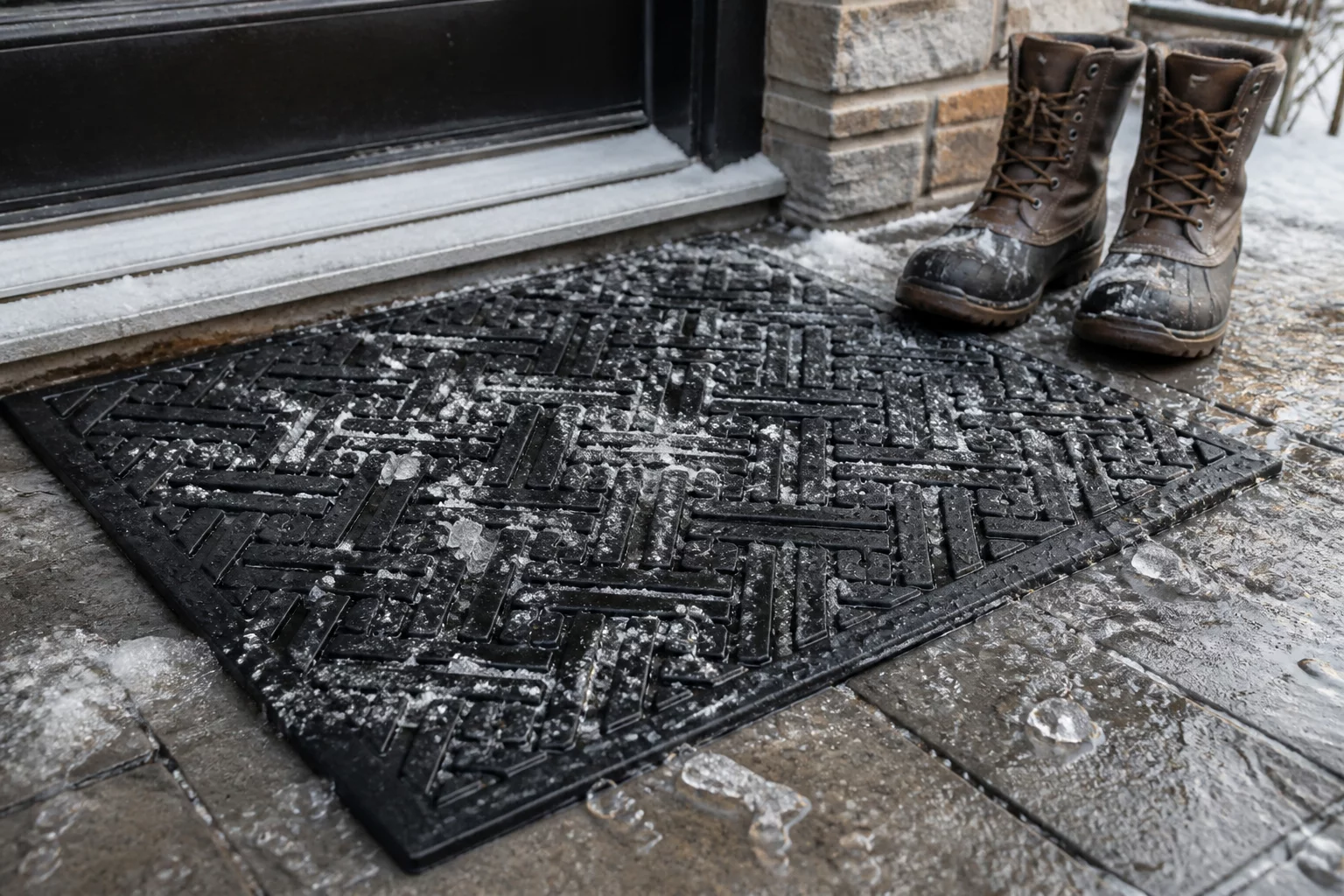
Winter changes the rules for entryway protection completely. When heavy boots drag in compacted snow, abrasive road gravel, and corrosive calcium chloride, standard indoor mats become soaked, freeze solid, and transfer moisture straight onto hardwood floorboards. Choosing the right mat system during cold seasons requires understanding freeze-resistant rubber compounds, moisture containment dams, and dual-zone wiping mechanics.
Key Principles for Maximum Mat Longevity
Extreme cold causes low-grade plastics and vinyl backings to turn brittle, snap underfoot, and slip dangerously across slick concrete or tiled porches. A reliable winter exterior mat relies on 100% vulcanized synthetic or natural rubber that remains pliable down to minus thirty degrees. Deep geometric grooves and raised scraper nubs dislodge compacted snow from deep boot treads before you ever step through the front doorway. Without aggressive scraping channels, snow melts inside the house and turns entry foyers into slippery slip hazards.
Expert Tip
Always deploy a two-zone defense in winter: place a heavy-duty rubber scraping mat outside the door to strip away heavy slush, and an absorbent bi-level mud trapper mat directly inside to soak up melted water and catch white salt residue.
Step-by-Step Maintenance Protocol
Managing winter mats requires a structured cleaning rhythm to stop accumulated salt crystals from breaking down the synthetic fibers and degrading your threshold seals. Heavy de-icing chemicals dry into crusty white patches that grind into shoe soles. Follow these essential practices throughout the freeze-thaw cycles of the season:
- Regular dry vacuuming prevents deeply embedded abrasive grit from abrading carpet piles.
- Avoid saturated hose rinsing on natural coir backings to preserve natural fibers from freeze rotting.
- Keep rubber mats under sheltered porch overhangs during freezing rain conditions to maintain drainage channels.
- Rinse dissolved salt out of synthetic mud trappers with lukewarm water and mild detergent once every two weeks.
Seasonal Storage & Floor Protection
When switching seasonal doormats in autumn, thoroughly dry your warm-weather coir and decorative jute mats before rolling them loosely for basement storage. Inspect the floor area underneath your winter mats weekly to verify that moisture has not migrated around the edges. Premium rubber containment mats with raised water dams hold up to 1.5 gallons of liquid per square yard, completely insulating hardwood and laminate flooring from catastrophic warping.
Dan
Verified BuyerGood advice for the snow season.
We get severe snow buildup and my previous coir mat froze into an icy brick within weeks. Switching to an aggressive rubber scraper on the porch and a deep microfiber mud trapper in the hallway solved all moisture issues.